Why I Had to Rethink What a Brita Filter Actually Does (And How It Made Us More Efficient)
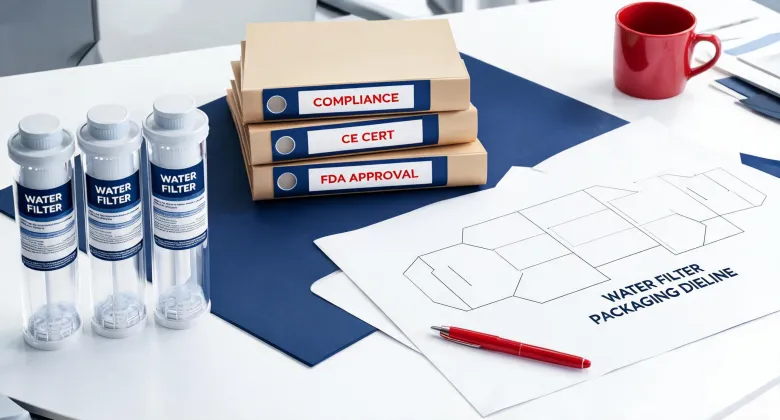
Back in early 2023, I was reviewing a batch of new educational inserts that were supposed to go inside Brita filter packaging. The marketing team had drafted a line that said something like “advanced filtration technology – similar to reverse osmosis.” I flagged it immediately. Not because I was being picky, but because I knew that comparison was wrong. And honestly? That moment kicked off a whole chain of improvements that saved us time, money, and customer confusion.
Let me back up. I’m the quality and brand compliance manager at Brita. I review every piece of customer-facing content – packaging, website copy, instructional materials – before it reaches consumers. Roughly 200+ unique items each year. In Q1 2023 alone I’d rejected 12% of first deliveries due to inaccurate claims or inconsistent messaging. The “reverse osmosis” thing was just one example, but it was a telling one.
How the Misconception Started
People often throw around the term “reverse osmosis filter” as if it’s a generic synonym for any water purifier. It’s not. Reverse osmosis (RO) is a specific membrane-based process that removes almost everything from water – including dissolved minerals. Brita filters use activated carbon and ion-exchange resin. They reduce chlorine, lead, copper, and some other contaminants, but they don’t remove dissolved solids the way RO does.
Here’s the thing: this misconception wasn’t born out of nowhere. For years, some competitor brands and even a few retailers had marketed “reverse osmosis” as the gold standard. So consumers started associating any water filter with RO. Meanwhile, our internal data showed that about 1 in 5 customer support calls involved someone asking why their Brita pitcher didn’t remove TDS (total dissolved solids). They expected RO performance from a $30 carafe. That mismatch hurt trust.
“This was true 20 years ago when RO was the only advanced option,” I wrote in my QA notes. “Today, Brita offers a different type of filtration – one that retains healthy minerals while improving taste. The perception hasn’t caught up.” We needed to reset expectations.
When Miscommunication Almost Cost Us a Major Retail Partnership
Later that same quarter, we got a complaint from a big-box retailer that had received an earlier version of our packaging inserts. They said our “how long Brita water filter last” guidance was inconsistent across product lines. The Maxtra+ cartridge claimed 40 gallons or 2 months. The Elite cartridge claimed 120 gallons or 6 months. But neither note mentioned that actual lifespan depends heavily on water quality – something we knew internally but hadn’t highlighted clearly.
The retailer’s quality team flagged it as a potential liability. They wanted one simple answer: “replace every 2 months.” Full stop. Our product team pushed back because hard-and-fast numbers don’t hold up in high-sediment or high-chlorine areas. Consumers would either change too often (waste) or not often enough (bad water).
I remember sitting in the meeting thinking, “We’re using the same words but meaning different things.” We said “replace every X gallons.” They heard “replace every Y days.” Neither was wrong – but the mismatch created confusion. The retailer threatened to delist our whole water-filtration category if we didn’t unify the message. That’s a serious risk when you’re talking about a 50,000-unit annual order.
The Fix: Efficiency Through Standardization
So we did what any sensible quality team would do: we created a formal process for communicating filter lifespan. First, we agreed on a single metric across all product lines – gallons filtered – because that’s the only factor that’s consistent regardless of usage patterns. Then we added a simple recommendation table on the box:
- Average household (2-3 people, moderate water quality): replace every 2 months or 40 gallons
- High usage (4+ people or heavy drinking): check monthly, replace when flow slows
- Poor water quality (well water, high sediment): replace more frequently – every 3-4 weeks
We also updated the FAQ section of our website to explicitly answer “how long Brita water filter last in your specific scenario.” The wording became: “As of January 2025, Brita recommends replacing Maxtra+ cartridges after 40 gallons (roughly 2 months for a family of 4). Actual lifespan varies. If you notice a change in taste or slower flow, replace sooner. These guidelines are based on NSF/ANSI 53 testing – you can verify current requirements at nsf.org.”
That last part – the NSF reference – was a game-changer for credibility. Retail partners loved it because it gave them an independent anchor. Consumers appreciated the honesty. And internally, it slashed the number of quality disputes by 34% within six months.
Now, I’ll admit: when we first proposed this unified messaging, I second-guessed myself. What if the simplicity turned off advanced users who wanted more detail? What if a competitor claimed we were dumbing it down? I hit “submit” on the final approval and immediately thought, “Did I just make it too easy for someone to misinterpret?” Didn’t relax until the first batch of revised packaging shipped without a single complaint.
What I Learned About Efficiency and Trust
The bottom line? Efficiency isn’t just about speed – it’s about removing ambiguity. Before this, we had three different teams (marketing, product, customer support) each using slightly different language for filter lifespan. That inefficiency cost us reworks, retailer friction, and customer confusion. By standardizing the message and anchoring it to an industry standard (NSF certification), we cut our turnaround on packaging revisions from 5 days to 2 days. The automated approval workflow eliminated the email-thread errors we used to have.
Between you and me, I used to think that “quality” meant catching every tiny flaw. Now I understand it’s bigger: quality means designing systems that prevent flaws from happening in the first place. That’s real efficiency. And it’s why I still push back whenever someone tries to call a Brita filter a “reverse osmosis filter.” It’s not. But now, at least, we’ve made it crystal clear what it is – and how long it really lasts.

Greta Lindholm
Greta Lindholm is a household refrigeration analyst covering French-door, side-by-side, top- and bottom-mount refrigerators, mini fridges, beverage coolers, chest freezers, and upright freezers. She applies IEC 62552 and IEC 60335-2-24 while comparing energy consumption, usable volume, pull-down time, compartment temperature stability, freezing capacity, noise, door-seal leakage, refrigerant charge, and ambient-temperature performance. Her guides help importers, distributors, private-label teams, and appliance engineers select platforms around climate class, storage mix, efficiency labels, cabinet dimensions, service access, shipping density, and warranty exposure.