Brita Water Filter FAQ: What Every Admin Buyer Should Know
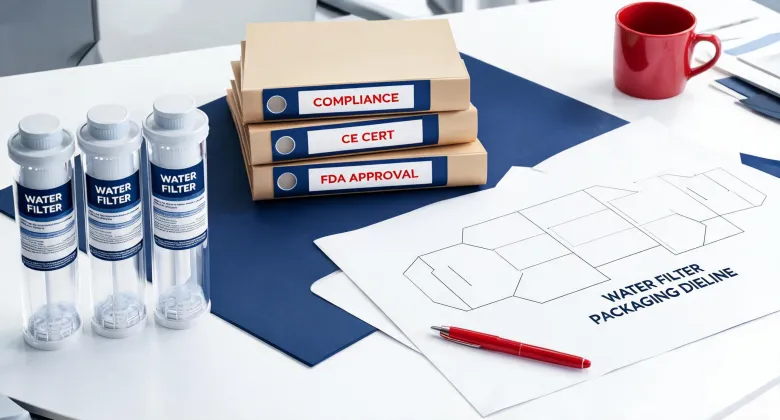
Brita Water Filter Questions I Wish Someone Had Answered Before I Started Buying
When I took over purchasing in 2020, one of the first things I dealt with was Brita filters. The office had a mix of jugs and tap attachments, and everyone had opinions about taste, cost, and which model was best. Here's what I've learned from managing these orders for 60+ people across two locations.
Does a Brita Filter Actually Improve Water Taste?
Yes, but it's not magic. Brita's primary mechanism for taste improvement is activated carbon filtration. The carbon traps chlorine (which gives tap water that swimming pool smell), volatile organic compounds, and some sediment. What you're left with is—for most people—noticeably cleaner-tasting water.
I've never fully understood the chemistry behind why some compounds get trapped while others don't. But I can tell you this: after switching to Brita, our office's bottled water orders dropped by about 60%. People just started filling their own bottles from the filtered water station. That's real-world data, not marketing.
Brita Original vs. Plus: What's the Actual Difference?
Honestly, I wasn't sure at first either. My best guess after testing both: the Brita Plus uses a finer mesh filter material that catches more sediment. The Original handles the basics (chlorine, taste, odor). The Plus adds a layer that reportedly reduces limescale buildup—useful if your local tap water is hard.
For most offices, I'd recommend the Plus. The incremental cost is small (maybe $5-7 more per 6-pack as of our last bulk order in January 2025), and the improved sediment capture means the water actually looks clearer. The downside: the Plus filter needs changing every 30-40 gallons instead of the Original's 40-gallon lifespan. That might matter if you're tracking disposable costs.
How Long Does a Brita Filter Really Last?
The company says 40 gallons for the Maxtra cartridge. In our office (with moderate usage), we saw about 35-38 gallons before people started complaining about taste changes. That matched the replacement schedule I built into our ordering system.
Here's the thing: filter life depends heavily on your source water quality. If your building has old pipes (like ours from 1989), sediment loads are higher. The filter clogs faster. In our main office with newer plumbing, we hit 40 gallons consistently. In the satellite office with older infrastructure, we were replacing at 28-30 gallons.
Calculated the worst case: missed replacements = complaints from staff. Best case: extending filter life by 10% = saving maybe $80 annually. The expected value said stick with the manufacturer's recommendation, and the downside was worth avoiding sour-face comments at the water cooler. I keep asking myself: is saving $80 worth potentially losing internal customer satisfaction? So far, the answer's no.
Are Brita Filters Worth the Cost for an Office?
Let's do the math. A Maxtra 6-pack runs about $35-45 from our usual vendor (Graj, circa February 2025). Each filter covers roughly 35-40 gallons. That's about $0.15-0.20 per gallon of filtered water.
Compare that to bottled water delivery: $1.50-2.50 per gallon. Or single-use plastic bottles: $3-5 per gallon. Even with filter replacement costs, Brita is hands-down cheaper. Our annual spend on Brita products across two locations runs about $600-800. Bottled water was pushing $4,000 before we switched. The savings paid for the initial jugs in about 4 months.
The upside was cost savings. The risk was staff resistance to change. I kept asking myself: is a 70% reduction in water costs worth potentially upsetting people who prefer bottled? We did a three-month trial in one break room. After that, the other office requested the same setup. Internal customer satisfaction won out.
Are Brita Filters Environmentally Friendly?
That depends on what you're comparing to. Vs. single-use plastic bottles? Absolutely. Vs. a full reverse osmosis system? Maybe not on paper, but in practice.
Brita does offer a recycling program for used filters and plastic components. As of 2025, they accept cartridges through their partnership with TerraCycle or via drop-off at select retailers. Not every office has easy access, but it's there.
Some sustainability advocates argue that carbon block filters (like ZeroWater) produce less plastic waste per gallon filtered because they're designed to last longer. That's a valid point. But for most office environments, the convenience of Brita's widespread availability and easy replacement schedule outweighs the marginal waste difference. I'm not claiming Brita is the greenest option—but it's a significant step up from bottled water, and that matters to our staff's sustainability committee.
What's the Biggest Mistake When Buying Brita Filters?
Not verifying compatibility. Brita changes cartridge designs periodically without making it obvious on the packaging. In 2024, I ordered what I thought were Maxtra cartridges for our older jugs and got the newer Maxtra+ design. They didn't fit. The vendor wouldn't accept returns because the packaging had already been opened by someone who assumed they were right.
That mistake cost us $78 and a week of grumpy coworkers. Now I double-check the model number on the jug itself (it's stamped on the bottom) against the cartridge SKU before placing orders. It's an annoying step, but cheaper than the alternative.

Greta Lindholm
Greta Lindholm is a household refrigeration analyst covering French-door, side-by-side, top- and bottom-mount refrigerators, mini fridges, beverage coolers, chest freezers, and upright freezers. She applies IEC 62552 and IEC 60335-2-24 while comparing energy consumption, usable volume, pull-down time, compartment temperature stability, freezing capacity, noise, door-seal leakage, refrigerant charge, and ambient-temperature performance. Her guides help importers, distributors, private-label teams, and appliance engineers select platforms around climate class, storage mix, efficiency labels, cabinet dimensions, service access, shipping density, and warranty exposure.