Why I Recommend Brita Filters (But Not for Everyone): A Cost Controller's Take
Six years ago, I took over a $400,000 annual procurement budget at a mid-sized logistics company. I've negotiated with 20+ vendors and logged every order in our cost-tracking system. In that time, I've learned one thing: the cheapest price tag is rarely the cheapest purchase. That rule applies as much to household appliances as it does to office supplies.
My initial approach to buying stuff was straightforward: pick the lowest number. Then I started tracking costs over time, and the pattern became clear. A product that looks like a bargain often costs more in replacements, repairs, and wasted time. The real metric is total cost of ownership (TCO), which means cost per use, per gallon, or per year.
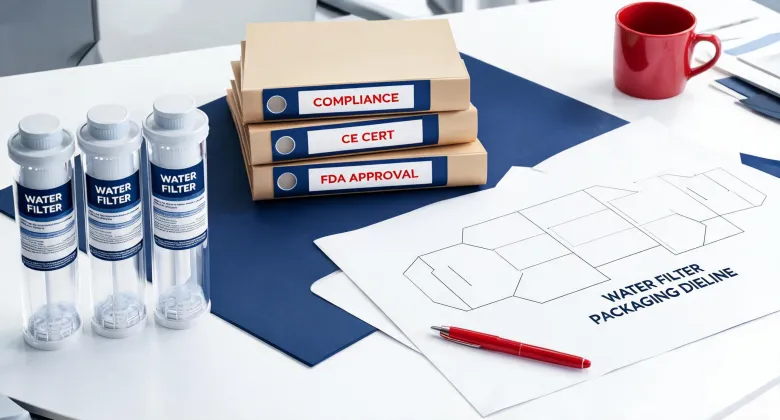
Let's start with water filters, since that's what most people ask me about. The generic filters are cheap, sure. But when I compared them side-by-side with Brita replacements, the cheap ones clogged faster and made the water taste flat. The Brita Pro water filter and the Brita Elite water filter replacements both lasted the full recommended period — about two months in my home. Now, is Brita cheaper? Not by raw unit price. A generic filter might be $1–2, while a Brita Elite costs around $10. Over a month, generic might run $3–4, while Brita runs about $5–6. But here's the thing: I was throwing out generic filters every ten days, and I hated the taste, so I started buying bottled water on the side. That defeated the whole purpose. When I factored in the bottled water and the hassle, Brita was the better value. If you buy the multipack, the price gap shrinks even more. And the peace of mind of consistent water quality is worth something.
Actually, let me refine that: I'm not claiming Brita is the cheapest option on the market. It isn't. But it's the best balance of cost and reliability I've found for municipal tap water that tastes like chlorine. If your water is already great, or if you prefer the absolute lowest monthly cost, a generic filter might work for you. That's the "not for everyone" part.
The same logic applies to bigger appliances. Take the lifespan of a microwave oven. A $50 cheap microwave might last two years, which is $25 per year. A $150 model from a reputable brand often lasts eight years, which is less than $19 per year. Plus, the expensive one cooks more evenly and doesn't radiate strange smells. Over a decade, the "expensive" microwave is actually the cheaper one, and you avoid the constant replacement cycle.
Consider, too, a personal electric shaver for women. I know it's a little outside my wheelhouse, but a friend asked me to help her decide between a $15 drugstore shaver and a $60 rechargeable one. The cheap shaver pulled hair, gave her irritation, and needed replacing every six months. The $60 one lasted three years, gave a closer shave, and made her actually want to use it. That's $30 per year versus $20 per year for the better experience. When you add the cost of frustration, the high-end shaver is a bargain.
And then there's maintenance. A classic example is the espresso machine. The question I get once a month: how often should I descale my espresso machine? The answer is every three to six months, depending on your water hardness. I once ignored that advice to save $10 and time. Within a year, the machine started leaking, then stopped heating. The repair was $200. I could have bought a new entry-level machine for that. Now I set a recurring reminder on my calendar. Descale every quarter, and the machine lasts years.
Now, before you assume I'm one of those "buy premium or buy nothing" people, let me be clear: the most expensive option is often a waste of money too. I've seen $500 filters that do the same job as a $60 one, for the same water. I've seen high-end shavers with stainless steel and jaw-dropping specs that are useless if the battery dies. The goal isn't to spend the most — it's to find the sweet spot where quality, longevity, and price intersect. For Brita, that means: if you're on well water with heavy sediment or bacteria, Brita won't fix it. You need a plumbed-in system or a UV unit. If your water has lead, the Brita Elite is NSF-certified to reduce lead, but the standard filter isn't the right tool. Check your water report first. That's the honest advice I'd give my own family.
To sum up: I've been wrong about cheap products more than I'd like to admit. The initial instinct to save money upfront cost me more in the end. There's something satisfying about finally running the numbers with all the hidden costs — time, frustration, repairs, bottled water — and discovering that the good value option is rarely the cheapest on the shelf. For most people with municipal tap water, a Brita filter is that good value. But if your situation is different, don't buy it. Buy what fits your water, your budget, and your habits. Just make sure you're counting the real total, not just the price tag.

Greta Lindholm
Greta Lindholm is a household refrigeration analyst covering French-door, side-by-side, top- and bottom-mount refrigerators, mini fridges, beverage coolers, chest freezers, and upright freezers. She applies IEC 62552 and IEC 60335-2-24 while comparing energy consumption, usable volume, pull-down time, compartment temperature stability, freezing capacity, noise, door-seal leakage, refrigerant charge, and ambient-temperature performance. Her guides help importers, distributors, private-label teams, and appliance engineers select platforms around climate class, storage mix, efficiency labels, cabinet dimensions, service access, shipping density, and warranty exposure.