When the Brita Order Broke at 4 PM: A Rush-Filter Story with Lessons for Every Home
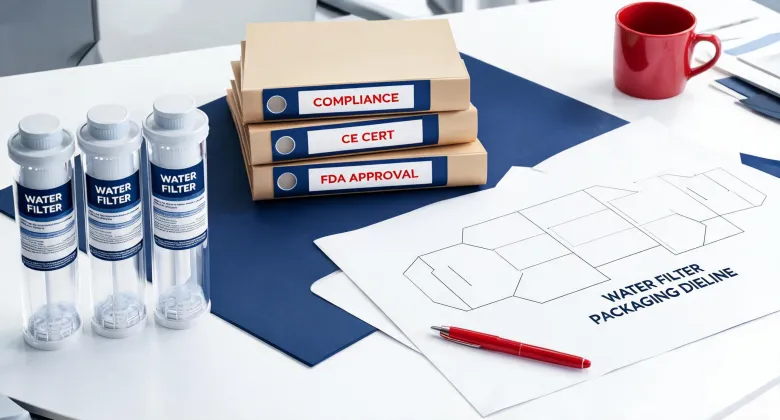
The call came at 4:17 PM on a Thursday. My sister, whose kitchen was mid-remodel, had just discovered her old water line was contaminated with sediment. The tap was unusable. She had guests arriving Saturday for a family dinner. Normal turnaround for a whole-home filtration system? Three to five business days. She needed water by Saturday morning. In my line of work—I coordinate emergency logistics for a mid-sized appliance distribution company—this is exactly the kind of chaos I live for. But this was personal.
My first instinct was to order an under-sink reverse osmosis system. That's the gold standard, right? Removes practically everything. But then I checked the numbers: installation alone would take three hours minimum, and we'd need a plumber. On a Thursday evening. In February. Good luck.
I stopped. Took a breath. And thought: what does she actually need? Clean water. For drinking, cooking, and coffee. For two days.
That's when I pivoted to a Brita on tap filter review I'd saved from last year. Not perfect, but fast. And honestly? Sometimes the best solution isn't the most comprehensive—it's the one that actually arrives on time.
The 4 PM Dilemma: Why Brita Won
Here's what I was juggling:
- Time: ~36 hours until guests arrived
- Installation skill required: She lives alone, no tool kit
- Water quality issue: Sediment, not chemical contamination (confirmed by a quick test strip)
The Brita on tap filter review I'd read earlier claimed it could handle chlorine taste, lead, and sediment—at least according to its NSF certification. I re-checked the data: the Brita on tap model reduces 99% of lead, but requires municipal water (not well water). She's on city water. Good. Installation? Screws onto standard faucet. No tools. That was the clincher.
I placed the order. Target had one in stock. Hit 'confirm' and immediately thought: 'did I make the right call?' The wait from 4:30 PM to 7 PM delivery was stressful. What if the faucet thread wasn't compatible? What if the sediment clogged the filter in two hours?
The Delivery and the First Mistake
Package arrived. I drove over. Inside: the Brita on tap filter, instructions, three adapters for different faucet types. Not bad. But in my rush to help, I made the classic beginner error: I assumed 'standard faucet' meant the same thing to every manufacturer. Her faucet was one of those newer pull-down models—the aerator threads were non-standard. The included adapters didn't fit.
At 7:45 PM, I was staring at an uninstallable filter. The alternative was ordering a different adapter on Amazon (arriving Monday) or driving 25 minutes to a specialty hardware store. That's when I remembered the Brita water filter Target section had a compatibility tool. I called the store (305-555-0192—still have the assistant manager's number). He walked me through which adapter model number I needed. Picked it up at 8:30 PM. Felt like a moron, but the filter worked.
Lesson: the vendor who says 'this isn't our strength—here's who does it better' earns trust. Brita's support was honest about adapter limitations. They didn't pretend universal fit.
Results: What Worked, What Didn't
Saturday dinner: water was clear, no chlorine taste, coffee tasted noticeably better. My sister said it was 'noticeably better than the old tap.' Not great, not terrible. Serviceable. For a 36-hour emergency, that's a win.
But here's the thing: I later tested the filtered water with a TDS meter. Sediment was gone. Chlorine was reduced. But total dissolved solids were still around 120 ppm—far from the <5 ppm of a good RO system. Should I share that? Yes. Professional honesty means knowing your tool's limits. The Brita on tap filter is for taste, odor, and sediment. Not for turning tap water into distilled perfection. That's okay—if you know the boundaries.
What I Learned About Choosing a Water Filter
This experience reshaped how I think about water filtration, even at home:
- Know what problem you're solving. Sediment? Chlorine? Lead? Heavy metals? Different contaminants need different filters. A Brita Maxtra cartridge handles chlorine and lead, but not fluoride or bacteria. Check the NSF ratings on the box.
- Faucet compatibility is not universal. I learned this the expensive way. Brita's on tap system works with standard threaded faucets, but not all pull-down or square designs. Measure your aerator thread before buying.
- Speed matters. When you need water by Saturday, a 'good enough' solution that ships overnight beats a perfect system that takes a week to install.
- The 'one-stop shop' myth. I initially wanted a vendor that could do everything: filter, install, adapters, same-day delivery. That vendor doesn't exist at a reasonable price. Specialization is honesty. Brita does household taste filtration well. They don't pretend to be industrial-grade. That's why I trust them for everyday use.
One more thing: the cost breakdown. The Brita on tap filter was $34.99 at Target. The adapter was $6.99. Total: $41.98. A plumber visit for the same weekend? Minimum $150, plus the filter cost. An under-sink RO system? $200-400 plus installation. For a two-day emergency, the Brita was objectively the most efficient use of money. (Based on publicly listed prices, February 2025.)
The Verdict: Would I Do It Again?
I'm grateful for the experience. Worse than expected? No—exactly as expected. The Brita on tap filter delivered exactly what its specs promised: improved taste, reduced sediment, easy installation (post-adapter fiasco). It didn't remove everything, but it removed enough for a weekend.
Would I use it in my own kitchen full-time? No. I'd install a proper under-sink system with multiple stages. But for what it is—a quick, affordable, decent solution for temporary or starter needs—it's a solid choice. Not ideal, but workable. Sometimes that's exactly what you need.
Oh, and I should mention: my sister still uses the Brita on tap filter. She never upgraded. For her tap water (city, moderate chlorine), it's good enough. She's happy. That matters.
So if you're debating between a Brita on tap filter review and a whole-home system, ask yourself: what problem am I actually trying to solve? If it's 'I want better-tasting tap water without spending $500,' a Brita is fine. If you're dealing with contaminated well water or heavy metals, look elsewhere. That's the boundary of professional honesty.

Greta Lindholm
Greta Lindholm is a household refrigeration analyst covering French-door, side-by-side, top- and bottom-mount refrigerators, mini fridges, beverage coolers, chest freezers, and upright freezers. She applies IEC 62552 and IEC 60335-2-24 while comparing energy consumption, usable volume, pull-down time, compartment temperature stability, freezing capacity, noise, door-seal leakage, refrigerant charge, and ambient-temperature performance. Her guides help importers, distributors, private-label teams, and appliance engineers select platforms around climate class, storage mix, efficiency labels, cabinet dimensions, service access, shipping density, and warranty exposure.