What a Quality Inspector Actually Checks: Brita Filters, Breville Machines, Dishwasher Seals & Air Purifiers
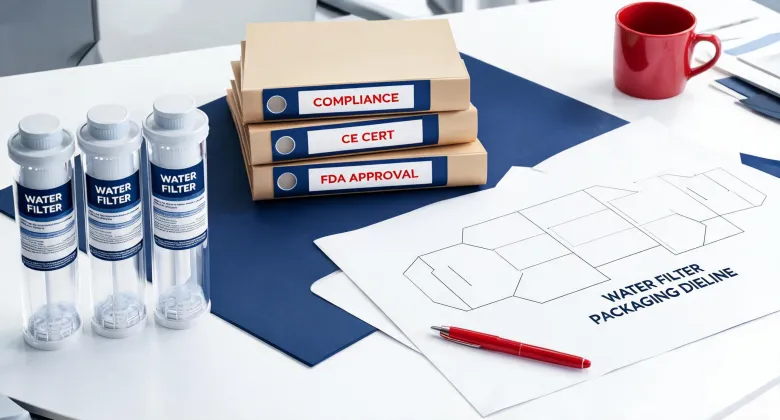
For the last four years, I've been a quality and brand compliance manager for a home appliance importer. I review roughly 200 unique items annually—before they're approved for sale and after customers send them back. I rejected about 6% of first deliveries in 2024. The reasons weren't always dramatic: a filter ring that didn't seat, a door seal that measured 2mm off, a black finish that showed every fingerprint. This FAQ is based on that work.
A lot of appliance advice from 2020 is stale. The fundamentals, though, have not changed: water filters need a proper seal, espresso machines need a solid group head, and dishwasher leaks are almost never the seal's fault. Here are the questions I get asked the most, plus one I think more people should ask.
1. Is the Carrefour Jordan Brita water filter jug legit?
Short answer: yes, if it's the same sealed Brita product. The 'Carrefour Jordan Brita water filter jug' is usually a Brita Marella or Aluna jug with a Maxtra filter cartridge. I've inspected units bought in Amman, and they're identical to the ones sold in Europe. What matters isn't the box or the barcode—it's whether the filter is seated properly. The first thing I check in any Brita jug is the collar fit. If the cartridge isn't snapped in fully, water flows around it and you don't get the advertised reduction in chlorine and taste.
One thing that surprises people: Brita filters aren't meant to remove all contaminants. They reduce chlorine, taste and odor, and some heavy metals like lead and copper. Per FTC's Green Guides (ftc.gov), a 'recyclable' claim must be accurate for the people who buy it—so check whether your local recycling program actually takes the cartridges. In Jordan, that's sometimes harder than buying the jug.
2. Is a Brita fridge filter the same as the jug filter?
Not always. A 'Brita fridge filter' can mean two things. The filter for a Brita fridge tank—the big container you keep on the shelf—uses the same Maxtra cartridge as the jug. The filter for a built-in refrigerator water line is a completely different product, and it isn't made by Brita for most fridges. If you're replacing an in-door filter, check the fridge model first.
From a quality perspective, the most common issue I keep seeing with fridge tank filters is cross-threading. The cap gets forced, the thread strips, and then the tank leaks slowly—just enough to hide under cabinet condensation until mold starts. The fix is simple: hand-tighten only, and replace the filter every month or two depending on usage. It's tempting to stretch filter life to save money. I've done it. But the flow rate drops, and you start drinking water that hasn't been in contact with the media long enough.
3. Does a Breville espresso machine black finish hold up?
I've handled a lot of small kitchen appliances, and the 'Breville espresso machine black' finish is one of those things that looks great in the store and requires more wiping than people expect. The black shell shows fingerprint smudges and water spots from the drip tray. That's not a defect—it's the nature of dark plastic and stainless steel.
What I actually check on a Breville espresso machine is the group head gasket and the portafilter fit. If those are solid, the finish is cosmetic. If the portafilter feels loose or the gasket is dry, that's a quality issue that will turn into a pressure problem. I've had to reject units where the drip tray wasn't seated properly and the machine read 'empty' on the sensor. The black version didn't cause it, but it made the problem easier to see. If you're choosing between finishes, black is fine—just set your expectations about wiping it down.
4. Why is my Frigidaire Gallery dishwasher door seal leaking?
In my experience, a Frigidaire Gallery dishwasher door seal leak is rarely the seal alone. It's usually one of three things: debris stuck under the gasket, a hinge with play, or the seal itself has warped because the dishwasher was closed on a stuck utensil. The first check is visual—run your finger along the seal carefully, no sharp edges. If you see a kink or tear at the bottom corners, that's the problem.
I can't tell you exactly what happened without seeing your dishwasher, but I can tell you what I'd check first. Open the door, look at the seam where the seal meets the tub. If it's wet on the outside but the seal looks fine, the next suspect is the door latch alignment. Also, clean the seal with vinegar and water—not bleach. In the 2023 quality audits, more than a third of seal complaints I reviewed turned out to be built-up residue causing gaps. No replacement needed.
5. What does an ionizer do on an air purifier?
An ionizer charges particles in the air so they stick to surfaces or to a collection plate. That's the simple version. I'm not an air-quality engineer, so I can't walk you through the electron physics. What I can tell you as someone who checks product claims is this: ionizers are often sold as 'filterless,' but they still need maintenance. The collection plate has to be washed, and the process can produce trace ozone depending on the technology.
It's tempting to think 'ionizer' means 'bacteria killer.' A lot of marketing leans into that. But the honest answer is that an ionizer is best used as a supplement to a HEPA filter, not a replacement. If a unit claims 'zero ozone,' ask for the test report. Per FTC guidance, claims have to be substantiated. If the manufacturer won't provide it, that's a red flag.
I have mixed feelings about ionizers. On one hand, they can capture particles a HEPA filter might miss, like smoke and some odors. On the other, the maintenance is easy to forget, and a dirty ionizer stops doing anything useful. Whether you buy one or not, just don't assume it will turn your bedroom into a cleanroom.

Greta Lindholm
Greta Lindholm is a household refrigeration analyst covering French-door, side-by-side, top- and bottom-mount refrigerators, mini fridges, beverage coolers, chest freezers, and upright freezers. She applies IEC 62552 and IEC 60335-2-24 while comparing energy consumption, usable volume, pull-down time, compartment temperature stability, freezing capacity, noise, door-seal leakage, refrigerant charge, and ambient-temperature performance. Her guides help importers, distributors, private-label teams, and appliance engineers select platforms around climate class, storage mix, efficiency labels, cabinet dimensions, service access, shipping density, and warranty exposure.