The Hidden Cost of Delaying Brita Filter Replacement Parts (and Other Home Repairs)
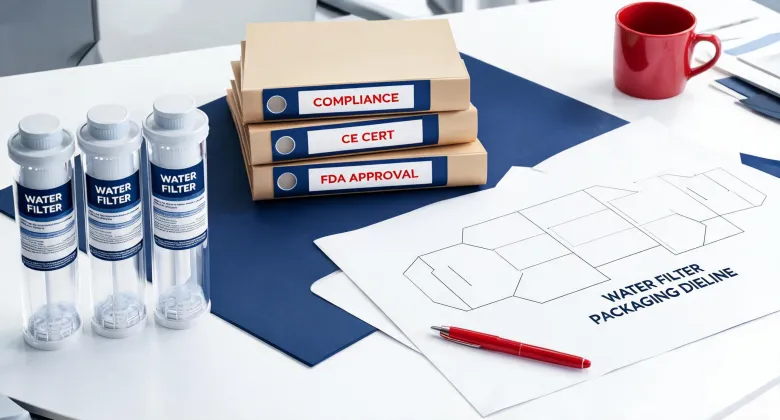
I'm a dispatch coordinator at a home-appliance repair company. In eight years, I've triaged hundreds of urgent calls—maybe 400, maybe 380, I'd have to check the log. The one thing I've learned is that most emergencies aren't accidents. They're small problems that waited too long.
The most expensive sentence in home repair is, “I'll keep an eye on it.”
The Call That Made It Click
In March 2024, at 5:15 PM, a tenant found water dripping through the kitchen ceiling. The source was the washing machine shut off valve feeding the unit above. The owner told me it had been “dripping for a while,” but they didn't want to pay a plumber last month. That delay turned a $28 DIY part into a $680 after-hours invoice—and that was before the drywall repair started. The worst part? This was one of our busiest weeks, so getting a tech there at 8 PM cost us all overtime.
The same week, a customer called to ask how long should a heating element last in a dryer. The honest answer: 10 to 14 years if the dryer has good airflow. Hers had failed three times in seven years. The tech found a dryer vent packed with lint. Not a defective heating element. Not a cheap part. An $8 brush and twenty minutes once a year would have prevented every one of those repairs.
Then there are the filter calls. Someone orders Brita filter replacement parts after the water starts to smell—not before. I remember a woman who needed her pitcher ready for guests arriving Saturday. She paid $18 in overnight shipping for a $20 filter pack. If she had set up a recurring order, she would have paid the regular price and zero stress. That's not a Brita problem. It's a timing problem.
The Real Problem Hides Underneath
What do a leaking shut-off valve, a lint-choked dryer, and an overdue Brita filter have in common? They all send signals that are easy to ignore. A drip is quiet. A dryer cycle that takes longer is annoying, not fatal. Filtered water tastes a little flat, but you can still drink it. None of these turn on a red dashboard light. So we add them to an invisible mental list and wait until something breaks.
I've started telling customers that home maintenance is a system, not a collection of parts. If you only fix what fails in front of you, the system will eventually fail at the worst possible time. The deeper problem is that our attention goes to whatever is loudest. Efficiency—the quiet, boring kind—doesn't compete well with a water stain spreading across a ceiling. But it's the only thing that actually saves you money.
I call it the maintenance gap. It's the distance between the first tiny signal and the moment failure becomes undeniable. A two-week gap on a Brita filter means you're drinking worse water. A two-month gap on a dryer vent means two drying cycles for every load. A few months of ignoring a shut-off valve can mean a plumber, a ceiling patch, and an apology note to your neighbor. The gap is where emergency calls come from.
There's another pattern: decision paralysis. I know one person who spent two weeks deciding between a PUR vs Brita faucet filter for her office. Two weeks of bottled water, plastic waste, and a sink that still wasn't filtering. Not because one filter was bad. Both are certified, reputable options. But she wanted the “perfect” answer, and perfection didn't arrive. I'm not here to settle that debate. I'm here to say that the best filter is the one you install and replace on time.
What Waiting Actually Costs
Let me put real numbers on this, because part prices trick us into thinking a repair is cheap.
A washing machine shut off valve costs $25-$35. I've seen the same valve cause $700 in emergency service and water damage. A dryer vent cleaning costs $35 if you hire it out, or about $8 if you do it with a brush. A $400 dryer repair buys many vent brushes. A replacement filter cartridge for your Brita jug costs $15-$20. Skipping it doesn't ruin your plumbing, but over a year you'll probably spend more on bottled water or wait until the entire jug seems gross and replace the whole system, which costs $40-$50.
Personal care devices follow the same law. A Braun electric shaver is built to last. But its foil and cutter are wear items. If you replace the $40 cutter foil on schedule, the shaver can go for years. If you wait until it tugs your skin, you strain the motor and run the battery down harder. Eventually you throw out a $150 shaver because the $40 part got ignored. I saw that happen to a customer who brought it in because she hoped we could fix it—she actually said, “It's cheaper to buy a new one now.” No. It would have been cheaper to buy a small part when the first signs showed.
And don't get me started on environmental claims. I'm glad the FTC's Green Guides (ftc.gov) require companies to have evidence for words like “recyclable” or “reduces lead.” That means when a filter package says it removes chlorine, there's testing behind it. But testing only helps if you actually change the filter. A certified filter that's used past its capacity is just a decorated tube.
One of our company policies now includes a “maintenance calendar” for clients. Since we started adding automatic reminders for filter parts, valve checks, and vent cleaning, our last-minute emergency calls dropped about 30% in the first year. That saved us callbacks, and it saved our clients roughly $250 to $1,000 per incident. I'm not good at guessing exact savings—maybe 30%, maybe 28%—but the direction was clear.
The Boring Fix That Works
You don't need a spreadsheet or a home automation system. You need a reminder tied to something you already do, like daylight saving time. When you change your clock, also check: the washing machine shut-off valve (turn it off and on), the dryer vent (vacuum the lint), the Braun electric shaver foil and cutter, and all your water filters.
For Brita filter replacement parts, set up automatic delivery if you can. It's the classic efficiency move: the order happens without you, so the filter gets replaced before the water tastes bad. Same for a PUR or Brita faucet filter—decide once, set a reminder for the replacement cartridge, and move on.
If you're facing a homeowner question like how long should a heating element last in a dryer, write down the install date and set a reminder to clean the vent every year. If a heating element fails in three years, don't just replace it. Ask why. Lint, low airflow, or a bad thermostat are usually the killers—not the element itself.
The overarching mindset is: don't wait until the small problem becomes an emergency. Emergency work can be heroic, and I have a great team for it. But the customer who makes my day is the one who replaces a $20 part on schedule and never sees our van in the driveway. That isn't glamorous. That's efficiency—and it's the only competitive advantage that actually matters.

Greta Lindholm
Greta Lindholm is a household refrigeration analyst covering French-door, side-by-side, top- and bottom-mount refrigerators, mini fridges, beverage coolers, chest freezers, and upright freezers. She applies IEC 62552 and IEC 60335-2-24 while comparing energy consumption, usable volume, pull-down time, compartment temperature stability, freezing capacity, noise, door-seal leakage, refrigerant charge, and ambient-temperature performance. Her guides help importers, distributors, private-label teams, and appliance engineers select platforms around climate class, storage mix, efficiency labels, cabinet dimensions, service access, shipping density, and warranty exposure.