PUR vs Brita: A Quality Inspector’s Honest Take on Filter Choices, Coffee, and Knowing Your Limits
My opinion: “Best” is the wrong question
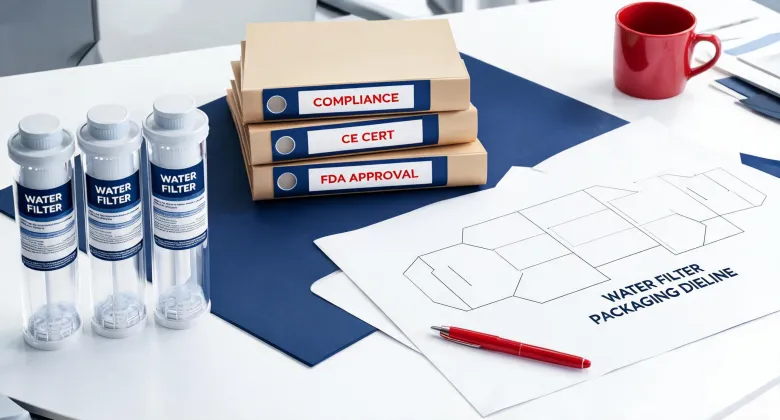
I’m a quality and brand compliance manager at a water filtration company. Every week I review around 200 filter assemblies before they ship. In 2024, I rejected 6% of first deliveries because of gasket gaps, inconsistent fill weights, or packaging that didn’t match the certified claims. So when someone asks me for a PUR vs Brita water filter comparison, I don’t answer with a winner. I answer with a test report.
The best filter isn’t the brand with the loudest marketing. It’s the one that’s certified for the water you actually have.
That sounds like a dodge, but it’s not. It’s the same boundary I use with every procurement decision.
Why I won’t choose a champion
1. Your water is not my water
I don’t have hard data on the water profile in your zip code. Based on years of inspecting filter media, my sense is that most “which filter is better?” arguments start from the wrong premise. If your complaint is chlorine taste, both Brita and PUR carbon-based filters can help. If you’re worried about lead, you need a filter certified to NSF/ANSI 53 for lead—not simply “reduces impurities.” If you have serious hard water, a pitcher filter is the wrong tool entirely. That’s the same message I’d give someone shopping for tankless water heater systems: know your feed water and maintenance habits before you commit.
2. Coffee taste is about chemistry, not logos
Search Brita water filter coffee taste improvement, and you’ll find plenty of people who say their coffee tastes cleaner after switching. That can be true—removing chlorine and some other off-notes can make a noticeable difference. But I wish I had tracked cupping scores alongside filtration data. What I can say anecdotally is this: the biggest improvement usually comes from going from stale tap water to any fresh carbon filter. The brand matters less than the cartridge being fresh.
(Which, honestly, is why I replace filters more religiously than any other home-maintenance task. It’s also why I don’t pretend a filter jug is a water softener.)
3. Specialists beat generalists
Here’s the less obvious point: a water filter brand should not be your first source for range hood LED lights, tankless water heater systems, or food-storage guidelines. That’s not false modesty. It’s quality control. When I need a component that requires thermal testing, I talk to someone who has thermal failure data. When I need a venting code, I talk to someone who installs those systems every day.
If you’ve ever tried to match a range hood LED light by shape alone, you know it’s not a no-brainer—the base, color temperature, and driver all need to line up. For a tankless water heater, the descaling schedule and flow rate matter. And for how long is rice good in fridge? I’ll point you to food-safety authorities, not a filter inspector. For the record, USDA still lists cooked rice as safe for 3–4 days when refrigerated at 40°F or below.
But aren’t you avoiding the Brita comparison?
Fair enough. Let me get specific. If a source won’t show certification, that’s a red flag. Per FTC guidelines (ftc.gov), claims like “reduces lead” have to be substantiated. That means the package should show a standard—typically NSF/ANSI 42 for taste, odor, and chlorine, or NSF/ANSI 53 for contaminants like lead and cysts. If a product doesn’t cite a standard, that’s a deal-breaker. Brita and PUR both make products that meet those standards, depending on the model. The right comparison is:
- Certified contaminants: What did the lab actually test for? Choose the filter that targets your concern.
- Replacement cost and availability: A filter you’ll actually replace on time beats a theoretical winner that stays in the cabinet.
- Flow and convenience: Do you want a pitcher in the fridge, a faucet mount, or something else?
- Testing documentation: Does the box or website reference NSF/ANSI 42 or 53? If not, keep looking.
I’ve rejected cartridges where the seal didn’t seat correctly—after a supplier told me “it’s basically the same as last time.” That was the one time it mattered. The defect was caught during final inspection, but it cost us 8,000 packed units and an entire day of rework. Trust me on this one: brand names don’t prevent defects—quality systems do. When I implemented our verification protocol in 2022, vendor paperwork audits cut our incoming defects by half.
The bottom line
If you force me to say something about Brita, I’ll say this: I trust the brand’s quality system more than I trust most anonymous internet comparisons. I also think PUR makes competent filters. My home decision is based on my city’s water report and the fact that I’m mostly trying to remove chlorine taste and keep my coffee from tasting like a swimming pool. That’s my context. If you have a private well with industrial contamination nearby, or a lead service line in an old building, your calculus will be different. I can only speak to the quality side of the supply chain, not your specific water conditions.
So the next time you see a “PUR vs Brita” headline that declares an absolute winner, look for the fine print. The honest answer—like the honest answer for range hood LED lights, tankless water heater systems, and rice storage—is that the expert who knows their limits is the one you can trust.
Bottom line: don’t ask “which brand is best.” Ask “which product is certified for the problem I have and the effort I’m willing to put in.” That’s the only verdict that holds up.

Greta Lindholm
Greta Lindholm is a household refrigeration analyst covering French-door, side-by-side, top- and bottom-mount refrigerators, mini fridges, beverage coolers, chest freezers, and upright freezers. She applies IEC 62552 and IEC 60335-2-24 while comparing energy consumption, usable volume, pull-down time, compartment temperature stability, freezing capacity, noise, door-seal leakage, refrigerant charge, and ambient-temperature performance. Her guides help importers, distributors, private-label teams, and appliance engineers select platforms around climate class, storage mix, efficiency labels, cabinet dimensions, service access, shipping density, and warranty exposure.