Is There a Water Filter Better Than Brita? An Office Manager FAQ
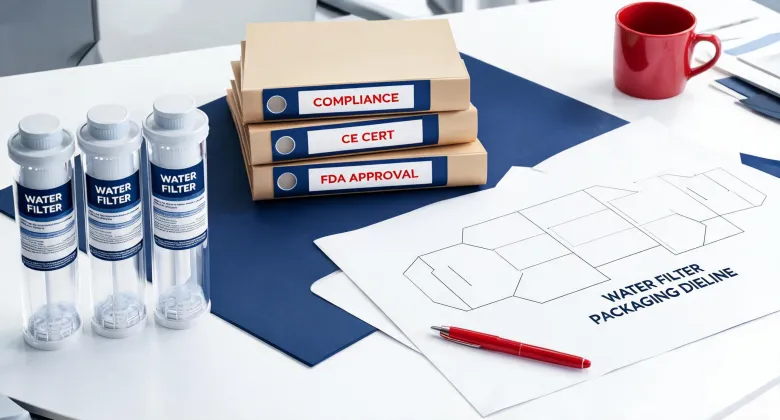
I'm an office administrator for a 40-person company. I manage all supply ordering—roughly $12,000 a year across a dozen vendors, and process 60 to 80 orders annually. I report to both operations and finance. When I took over purchasing in 2020, I thought my job would be about invoices and contracts. Turns out it's also about water filters and the weird questions people type into search engines.
If you're here because you searched 'water filter better than Brita,' 'can I put a Brita in the dishwasher,' or honestly even 'black bean soup instant pot' or 'can you iron on a patch with a hair straightener,' this article is for you. I can't promise every question makes sense, but I can give you straight answers.
1. Is there a water filter better than Brita?
Short answer: It depends. In our breakroom, Brita is basically the benchmark for affordable pitcher filters. It reduces chlorine taste and odor, and according to NSF/ANSI 53 certification standards, some models reduce lead. That's a third-party certification, not just marketing. But 'better' depends on what you need. If your water has high arsenic or nitrates, a Brita won't fix that. You'd need a reverse osmosis system or a whole-home filter. In that case, yes, there are water filters better than Brita—for that specific problem. For everyday office water where the main complaint is 'the tap water tastes weird,' Brita is still hard to beat. I'd rather buy a filter that fits the actual contaminant than one that promises everything. If you're only improving taste, expensive filtration is usually overkill. Also worth noting: a pitcher filter isn't permanent. The cartridge has a lifespan. If no one owns the replacement schedule, the filter goes stale and the water tastes like tap again. That's not a reason to avoid Brita; it's a reason to put one person in charge of replacements.
2. Can I put a Brita in the dishwasher?
I still kick myself for this one. We bought four pitchers for the office kitchen. The box didn't have a giant warning, and I assumed 'it's plastic, it's fine.' I knew I should check the care instructions, but thought 'what are the odds?' Well, the odds caught up with me. The lids warped, and two of the reservoirs didn't sit right afterward. Not ideal, but workable.
The filter is definitely not dishwasher safe. The pitcher itself? Some models are top-rack safe, some aren't. I've seen internet advice that says 'top rack is always fine.' I don't trust that for every model. Look at the bottom of your pitcher. If there's no dishwasher-safe symbol, don't risk it. Hand washing takes two minutes. Save yourself the replacement cost.
3. Black bean soup instant pot? Sure, but this is a water filter page
Every office manager knows search traffic can be messy. People who land here after searching 'black bean soup instant pot' are probably looking for a recipe. You can make it: soak dried beans, saute onion and garlic, add broth, chili powder, cumin, and a bay leaf, then pressure cook for about 30 minutes. But if you're looking for that recipe, you've taken a wrong turn. No hard feelings. I've also been asked whether we could swap the office water cooler for Brita and do the plumbing for a water softener at the same time. Those are two very different projects.
4. Do you need plumbing for a water softener?
Yes, you need plumbing for a water softener. A softener connects to your main water line, drain line, and usually needs a bypass valve. It's not a DIY weekend job for most offices. I got a quote for our building in 2024, and the price made me reconsider. Some offices install a point-of-entry softener when the water is hard enough to affect equipment. But that's an operations decision, not a supply closet decision. If you don't need softened water for the whole office, a filter pitcher is simpler and doesn't require plumbing at all. Faucet-mounted filters are a middle option too, but they still need a bit of installation. Why does this matter? Because the right solution depends on the problem you're actually trying to solve.
5. Can you iron on a patch with a hair straightener?
Technically, yes. Place a thin cloth over the patch, set the straightener to medium heat, press for 10 to 15 seconds, let it cool, and check the edges. Use medium heat, not high. Too much heat melts the adhesive before it bonds, and the patch will peel off in the wash. It's not what the patch manufacturer would recommend, but it's better than nothing. If you want the patch to last through regular laundry, an iron and a little fusible web is the more reliable route. Just don't do it on a jacket you care deeply about, because the heat can leave marks. This has nothing to do with Brita, but people ask.
6. Would I buy Brita again?
Yes. Even after choosing Brita over a plumbed-in system, I kept second-guessing. What if the team drank more than the pitchers could handle? The first few weeks until I saw how much water we were going through were stressful. Now, after three years, I understand the trade-off. A pitcher filter doesn't solve every water problem. But for the basic goal of making tap water taste better, it's simple, cost-effective, and easy to maintain. The fundamentals haven't changed, but the execution has—newer Brita pitchers have better flow and filter replacement indicators. I still wish the filters were a little cheaper, because replacement cost adds up. For our size, the annual cost of four pitchers and replacement filters is still lower than a plumbed filter system once you include installation and maintenance. I track those costs, so I'm not guessing. What was best practice in 2020 isn't the same in 2025, and that's a good thing.

Greta Lindholm
Greta Lindholm is a household refrigeration analyst covering French-door, side-by-side, top- and bottom-mount refrigerators, mini fridges, beverage coolers, chest freezers, and upright freezers. She applies IEC 62552 and IEC 60335-2-24 while comparing energy consumption, usable volume, pull-down time, compartment temperature stability, freezing capacity, noise, door-seal leakage, refrigerant charge, and ambient-temperature performance. Her guides help importers, distributors, private-label teams, and appliance engineers select platforms around climate class, storage mix, efficiency labels, cabinet dimensions, service access, shipping density, and warranty exposure.