Is a Brita Filter Reverse Osmosis? What $1,200 of Water Filter Mistakes Taught Me
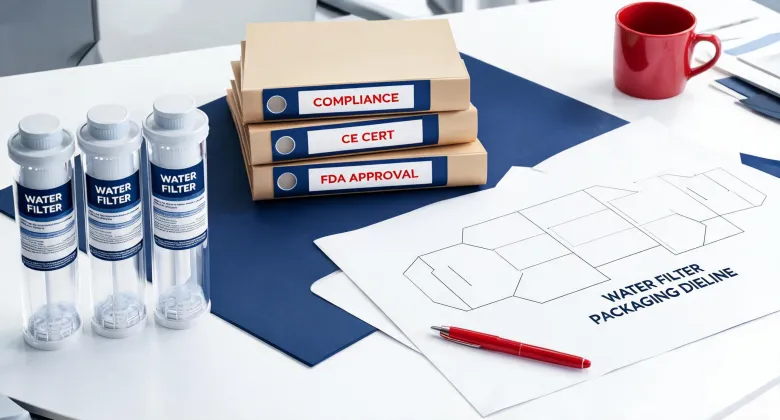
If you've ever stood in the water filter aisle wondering whether you need a $400 reverse osmosis system or a $30 Brita pitcher, this one's for you. I've made every mistake in the book so you don't have to.
Seven years ago, I knew nothing about water filtration. Since then, I've installed, tested, and broken more filtration setups than I'd like to admit—including one RO system I absolutely didn't need. Roughly $1,200 in wasted budget later, here are the answers I wish I'd had.
I'll cover whether Brita filters use reverse osmosis, what they actually remove, how they compare to RO systems, why Brita won't fix hard water in places like Mesa AZ, the filter replacement mistake that cost me, and whether Brita is actually worth your money.
Is a Brita Filter Reverse Osmosis?
No. Period. Brita uses activated carbon filtration. Reverse osmosis is an entirely different process.
RO systems push water through a semi-permeable membrane under pressure. The pores are so small that almost everything gets left behind—dissolved solids, heavy metals, fluoride, nitrates. That's why RO systems need a tank, a separate faucet, and decent water pressure. It's a mini water treatment plant under your sink.
Brita's carbon filters work through adsorption. Contaminants like chlorine, lead, and copper stick to the carbon granules as water flows past. The minerals your body wants, like calcium and magnesium, stay in the water.
People assume "water filter" is one category. From the outside, it looks like all filters do the same job. The reality? Different filters target different contaminants. RO strips nearly everything. Brita removes specific things. Neither is universally "better"—they're built for different problems.
What Does a Brita Water Filter Actually Remove?
This is where I made my first big mistake. I assumed anything labeled "water filter" would filter everything. It doesn't.
Brita's Maxtra and Elite filters are certified to reduce chlorine taste and odor, lead (under NSF/ANSI Standard 53), copper, mercury, cadmium, and certain microplastics depending on the model.
What they don't remove? Calcium and magnesium (that's hard water), fluoride, bacteria, viruses, nitrates, and arsenic. That list matters because it tells you exactly what Brita is and isn't good for.
Here's something vendors won't tell you: if you're on municipal water in the US, your tap water probably already meets safety standards. Brita's main job is making it taste better. That matters—chlorine and pipe odors are genuinely unpleasant—but it's important to know what you're paying for.
Never expected this to be the takeaway, but the specificity of Brita's claims is a good sign. They say "reduces lead" and "reduces chlorine," not "removes everything." Per FTC guidelines (ftc.gov), companies have to back up advertising claims with evidence. Overselling gets you in legal trouble. The careful wording tells me Brita is confident in what they've actually tested.
Brita vs. Reverse Osmosis: Which Do You Actually Need?
Here's the thing: most people don't need RO. I learned this the expensive way.
In 2021, I convinced myself my tap water was the problem. I bought a $600 under-sink RO system. Installation ran another $150. The water tasted… fine. About the same as the Brita pitcher I already owned. That's $750 for the same result I was getting from a $30 pitcher.
RO makes sense when your water has specific issues like high nitrates, arsenic contamination, total dissolved solids above 500 ppm, or health conditions requiring ultra-pure water.
For the average person on municipal water? A good carbon filter handles the two things you can actually taste: chlorine and odor. That's what a Brita water filter is designed to do. It does that job well.
And about hidden costs—RO systems waste about 3 gallons of water for every gallon they produce. That's money on your water bill every single month. Replacement filters for RO systems run $100-200 annually. The "premium" choice comes with recurring costs that don't show up on the shelf tag.
Will Brita Fix Hard Water? (Mesa, AZ Edition)
No. And if you live in a hard-water area like Mesa, Arizona, you've likely already learned this the hard way.
Hard water means dissolved calcium and magnesium. That's what leaves white scale on faucets and makes soap fail to lather. Brita doesn't touch those minerals. They're not contaminants—they're naturally occurring minerals that just happen to cause scale.
A water softener is the right tool for this job. It exchanges calcium and magnesium ions for sodium or potassium ions through a process called ion exchange. Completely different technology from carbon filtration.
I watched this exact mismatch happen with a client in Mesa in 2022. They bought a Brita pitcher hoping it would fix the scale on their faucets. The water tasted better, sure. The scale stayed. Not a Brita failure—a tool mismatch.
Same logic in reverse: if someone sells you a water softener to solve chlorine taste, they're overselling you. Each tool handles one job well, not every job.
This approach worked for us in Arizona, but our situation was straightforward city water with high hardness. If you're on a private well with sediment or bacterial concerns, the math changes. Test your water first, then choose.
How Often Should You Replace the Filter?
Brita says every 40 gallons or about every two months. Maxtra filters stretch to around 4 months. But here's the catch I learned the hard way:
In 2017, I went six months without changing a filter. The water still tasted fine, so I assumed the filter was still working. It wasn't. A saturated carbon filter stops capturing contaminants, and the ones you can't taste—lead, mercury, copper—slip right through. You literally cannot tell by tasting.
That mistake cost me maybe $40 in skipped filter replacements. But the real cost was drinking water I thought was filtered. That's the kind of mistake you can't quantify until it's already happened.
The fix is embarrassingly simple: set a calendar reminder. That's it. Two months. Done.
Is Brita Actually Worth the Money?
Let's do the math. For about $50-60 a year, a Brita setup gives you better-tasting water without buying bottled water, reduced exposure to lead and copper, and zero installation or plumbing work. The only maintenance is swapping a filter every couple of months.
Compare that to bottled water at $200-300 a year for a two-person household, an RO system at $500-800 upfront plus $100-200 annually in filters, or a whole-house water softener at $1,500-4,000 installed.
Look, I'm not saying Brita is right for everyone. If you own a house with hard water scale problems, buy a water softener. If your well water has nitrates, buy an RO system. But if you're on municipal water and just don't like the chlorine taste? A Brita pitcher is enough.
My perspective after all these years: the cheapest option is rarely the best value, and the most expensive one is rarely necessary. Brita sits in the sensible middle. That's not a bad place to be.
Trust me on this one. I've spent $1,200 learning this exact lesson so you don't have to.

Greta Lindholm
Greta Lindholm is a household refrigeration analyst covering French-door, side-by-side, top- and bottom-mount refrigerators, mini fridges, beverage coolers, chest freezers, and upright freezers. She applies IEC 62552 and IEC 60335-2-24 while comparing energy consumption, usable volume, pull-down time, compartment temperature stability, freezing capacity, noise, door-seal leakage, refrigerant charge, and ambient-temperature performance. Her guides help importers, distributors, private-label teams, and appliance engineers select platforms around climate class, storage mix, efficiency labels, cabinet dimensions, service access, shipping density, and warranty exposure.