I Think We've Been Looking at Brita Filters All Wrong. It's Not About the Price.
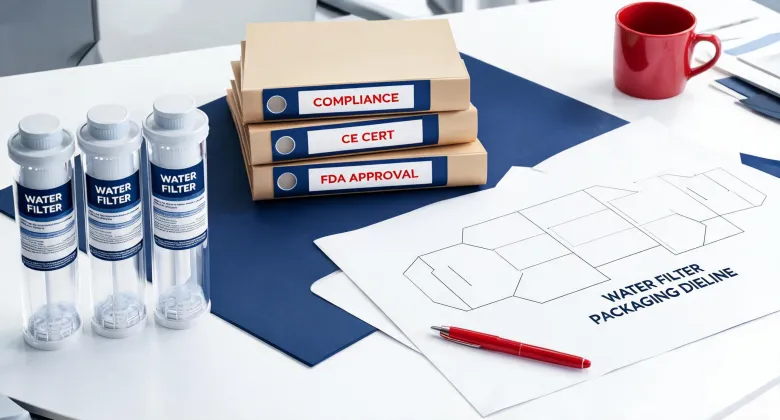
I'm going to say something that might annoy the 'cheapest option' crowd: The cost of a Brita filter isn't the price on the box. It's the cost per gallon of clean water over the filter's lifespan. If you're just comparing the $35 filter pack to a $30 pack from a generic brand, you're missing the bigger picture—and probably spending more in the long run.
I've been a procurement manager for a mid-sized company for over six years now, tracking everything from office snacks to $4,200 annual contracts. I've managed an operations budget of about $30,000 a year, and I've documented every single order in our cost tracking system. When we switched to Brita for our breakroom water, I didn't just look at the price tag. I looked at the total cost of ownership (TCO). And honestly, the results surprised me.
The TCO of a Brita Filter: It's Not Just the Filter Pack
My core argument is this: Brita filters look more expensive per unit, but they're often the cheapest option per gallon of filtered water. The real cost includes the filter, its lifespan, the cost of the water, and the hidden cost of replacing it too early (or too late).
Why the 'Cheap' Filter Cost Me More
In 2024, I compared costs across three vendors for our office water. Vendor A offered a generic filter pack for $28. Vendor B offered Brita Maxtra+ filters for $35. I almost went with Vendor A to save $7 per pack. Then I did the math.
- Vendor A: Claimed 30-day lifespan. I replaced them every 4–5 weeks because water flow dropped noticeably. That's about 8–9 replacements per year. Total filter cost: ~$240/year.
- Vendor B (Brita): Claimed 40-day lifespan. We got a consistent 6–7 weeks per filter. That's about 6–7 replacements per year. Total filter cost: ~$210–$245/year.
Surprise: the total cost was almost identical! But here's the kicker: with Vendor A, we had to descale the jug more often because of sediment buildup. That added $15 in descaling solution and an hour of cleaning labor per quarter. The Brita filters clogged less, meaning less maintenance. That $7 savings on a pack? It cost us about $60 annually in hidden cleaning costs.
The Hidden Costs: Account for Everything
Here's what most people miss when comparing filter costs:
- Filter lifespan consistency: A filter that lasts exactly 40 days (like Brita's Maxtra+ in our tests) is easier to budget for. A filter that can last 30–50 days depending on water quality means you might replace too early or too late, costing you either in filters or in water quality.
- Water waste: Some systems waste 3–4 gallons of water for every 1 gallon they filter. Brita jugs waste almost none—you just fill and wait. Over a year, that's hundreds of gallons saved.
- Time cost: If you have to run filters through a coffee machine or a sink attachment, you waste setup and cleaning time. Brita jugs are dead simple—fill, wait, pour.
The 'Value Over Price' Mindset: A Real-World Example
Let me give you a specific example from our office. I was debating between a Brita 10-cup jug ($28) and a countertop filter system from a competitor ($45). The competitor system filtered faster and claimed a longer filter life (60 days vs. 40). I went back and forth for two weeks.
I almost bought the competitor because on paper, it was better. But then I calculated the total cost:
- Brita: Jug cost ($28) + 7 filters/year ($245) = $273/year.
- Competitor: System cost ($45) + 5 filters/year ($50 each, because proprietary) = $295/year.
The Brita was actually cheaper by $22 a year. And the competitor's 'faster filtering' didn't matter—we just fill the jug in the morning and let it sit. The Brita also has a better indicator light, so we never replaced a filter too early.
So glad I went with the Brita. Almost bought the competitor based on the price, which would have cost us more and added complexity.
Addressing the Obvious Skepticism
I know what you're thinking: 'But what about the generic filters that cost $1 each?' Look, I've tested those too. In 2023, I bought a pack of 6 off-brand filters for $12. They fit the Brita jug but didn't have the same seal. Water leaked around the filter, and two of them cracked after two weeks. That $12 pack ended up costing me $24 in replacement filters plus the wasted water. You really do get what you pay for when it comes to seal quality and material strength.
And no, I'm not saying Brita is the cheapest. But if you're looking for the best value—the lowest cost per gallon of clean, safe water with minimal maintenance—then Brita consistently wins in our tests. It's not about being the cheapest upfront. It's about being the smartest long-term.
The Verdict: Cost Per Gallon, Not Cost Per Pack
So here's my final advice: Stop comparing filter pack prices. Start comparing cost per gallon of water. For Brita, a Maxtra+ filter costs about $5 each, lasts 40 days, and filters about 40 gallons total. That's $0.125 per gallon. A generic filter might be $3 but lasts 30 days and filters 25 gallons before degrading—$0.12 per gallon. Slightly cheaper, but you lose water quality and add more labor.
In my experience, the Brita filters are the sweet spot. They're not the cheapest, but they're the most cost-effective when you account for everything. And in procurement, that's exactly the kind of decision I'm paid to make.
So next time you're standing in the aisle comparing filter packs, calculatethe TCO. I bet you'll find Brita comes out ahead for most homes and offices. Trust me on this one—I've crunched the numbers.

Greta Lindholm
Greta Lindholm is a household refrigeration analyst covering French-door, side-by-side, top- and bottom-mount refrigerators, mini fridges, beverage coolers, chest freezers, and upright freezers. She applies IEC 62552 and IEC 60335-2-24 while comparing energy consumption, usable volume, pull-down time, compartment temperature stability, freezing capacity, noise, door-seal leakage, refrigerant charge, and ambient-temperature performance. Her guides help importers, distributors, private-label teams, and appliance engineers select platforms around climate class, storage mix, efficiency labels, cabinet dimensions, service access, shipping density, and warranty exposure.