From Brita Filters to Water Heaters: A Quality Inspector on Why Cheap Costs More
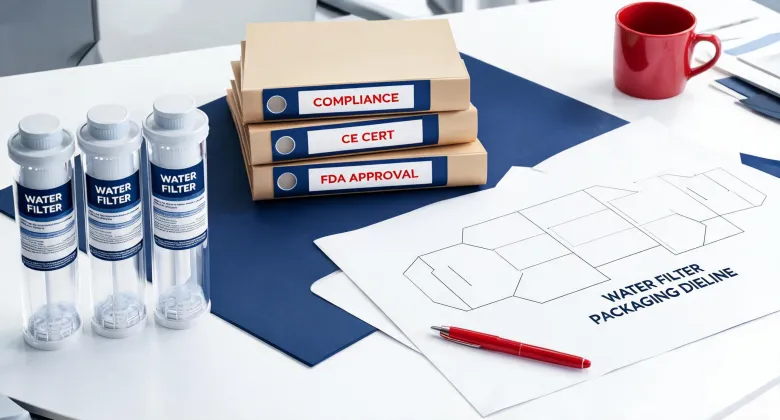
The third heating element burned out on a Saturday night. I was standing in the utility room, smelling that faint burnt-metal odor, wondering why I kept paying to fix the same problem. I'm a quality and compliance manager at a home water treatment company. I review roughly 1,200 products a month. I've rejected more than 6% of first deliveries this year because of spec deviations. Yet here I was, doing the exact opposite of what I'd tell my own vendors: ignore the root cause and reorder the cheapest replacement.
The real problem wasn't the heater. It was the water.
The Brita Filter That Made Me Question Everything
About a year earlier, I'd bought a Brita standard water filter pitcher for the kitchen. The water tasted fine, and the pitcher was reasonably priced. But when it came time to replace the filter, I saw a shelf full of generic cartridges next to the Brita boxes. Half the price. Same shape. I thought, What's the catch?
From the outside, generic filter cartridges look like the real thing. The reality is different. Many generic cartridges don't have third-party certification. When I finally checked the Brita water filter lead removal certification, I found that Brita's lead-reducing filters are certified under NSF/ANSI 53 to reduce lead by 99%. My generic cartridge didn't list any NSF standard on the box, and the packaging said almost nothing about what it removed. Maybe it filtered something. Maybe it didn't.
That brought back a memory from Q1 2024. Our company received a batch of 2,000 cartridges from a potential supplier. They looked fine. But when we opened them, the media weight was 18% lower than spec. They clogged in under two weeks in our test rig. The vendor said it was "within industry standard." We rejected the whole batch. Now every contract includes media weight testing.
I realized I was about to make the same mistake at home. I swapped back to a genuine Brita filter. It cost more per month, but it had a spec I could prove. That was the first decision that saved me from a much more expensive lesson.
The Dehumidifier Without a Pump
Around the same time, I was fighting basement humidity. I bought the cheapest dehumidifier I could find—no pump, just a bucket. It worked, until the bucket filled up. Then it shut off. On humid weeks, I would come home to a basement that smelled like old towels. I emptied that bucket thirty or forty times a month. More than once, I forgot, and the unit stopped running while the room still felt damp.
The whole house dehumidifier with pump cost about double the cheap unit. It also ran continuously and drained into the utility sink. No bucket. No shutoff. No mildew smell.
I went back and forth for a week. The cheap model would save me $200 now. The pump model would save my time, my basement walls, and maybe my lungs. Did I need the pump? No. But I needed to stop babysitting a bucket. I chose the pump model because the cost of doing nothing was higher.
Why Does My Heating Element Keep Going Out?
Back to the heating element. The technical reason is simple: hard water deposits calcium and magnesium on the element, forming scale. That scale acts like an insulator, so the element gets hotter and hotter until it melts or shorts out. The fix isn't a new heating element. It's softening the water.
That's when I pulled up a water softener cycle diagram. It looked like our factory flow chart: fill, brine draw, slow rinse, fast rinse, backwash. Each step has a purpose. The brine solution saturates the resin beads with sodium ions, which swap with calcium and magnesium during service. The regeneration cycle flushes the hardness minerals out of the resin. Then the softener goes back to protecting your pipes, your water heater, and your heating element.
I should have done this earlier. The three replacement heating elements cost around $450—no, $520, I'm including the plumber's overtime on a Saturday. A softener would have paid for itself by the second repair. According to the EPA, hard water isn't a health risk, but scale buildup is a known nuisance that shortens appliance life. I was living proof.
The trade-off was again upfront cost versus long-term value. The softener wasn't the lowest quote. But it was the only option that addressed the root cause instead of the symptom.
What I Learned
Looking back, I should have applied my work standards to my own home from day one. A product isn't just its purchase price. It's the cost of replacements, repairs, energy waste, and your own time. The Brita standard water filter with certified cartridges, the whole house dehumidifier with pump, and the water softener all cost more upfront. They also gave me something the cheap versions didn't: consistent performance. No surprise shutdowns. No water-quality doubts. No burned-out elements.
The lowest quote is rarely the cheapest. That's a lesson I've confirmed twice this year—once at work, once in my basement. If you're debating between a generic filter and a certified one, between a dehumidifier with or without a pump, or between fixing the same appliance again and fixing the water quality, run the total numbers first. My heating element is proof.

Greta Lindholm
Greta Lindholm is a household refrigeration analyst covering French-door, side-by-side, top- and bottom-mount refrigerators, mini fridges, beverage coolers, chest freezers, and upright freezers. She applies IEC 62552 and IEC 60335-2-24 while comparing energy consumption, usable volume, pull-down time, compartment temperature stability, freezing capacity, noise, door-seal leakage, refrigerant charge, and ambient-temperature performance. Her guides help importers, distributors, private-label teams, and appliance engineers select platforms around climate class, storage mix, efficiency labels, cabinet dimensions, service access, shipping density, and warranty exposure.